

The right anarkali colour depends on the occasion (red/maroon for weddings and festive events, green for Eid and Navratri, navy for formal and reception, pastels for daytime and casual) and your skin tone (jewel tones for dusky/wheatish, pastels and soft tones for all skin tones). Snyvia's anarkali collection starts from Rs.3,249. Free shipping. COD. 7-day returns.
An anarkali suit in the wrong colour for the occasion is like wearing a cocktail dress to a morning puja — technically ethnic wear, but visibly off. Indian occasions carry strong colour traditions: weddings call for celebratory jewel tones, Eid celebrations favour greens and cream, office settings need contained, structured colours.
Knowing which colour works where — and which colours your skin tone carries best — means you never look overdressed, underdressed, or out of place. This guide covers anarkali colours by occasion, skin tone, and season, with the cultural significance behind each choice.
Anarkali Colours by Occasion
Wedding (as a Guest)
Best colours: navy blue, emerald green, dusty rose, teal, wine/burgundy
Avoid: bridal red or heavy maroon. Wedding guest dressing calls for celebratory without competing — jewel tones give festive impact while stepping back from the bridal palette.
Wedding (as Close Family)
Best colours: royal blue, deep green, gold, wine, coral. Close family traditionally dresses more elaborately than guests — richer, deeper colours signal your role in the celebration.
Festive Celebrations (Diwali, Karva Chauth, Teej)
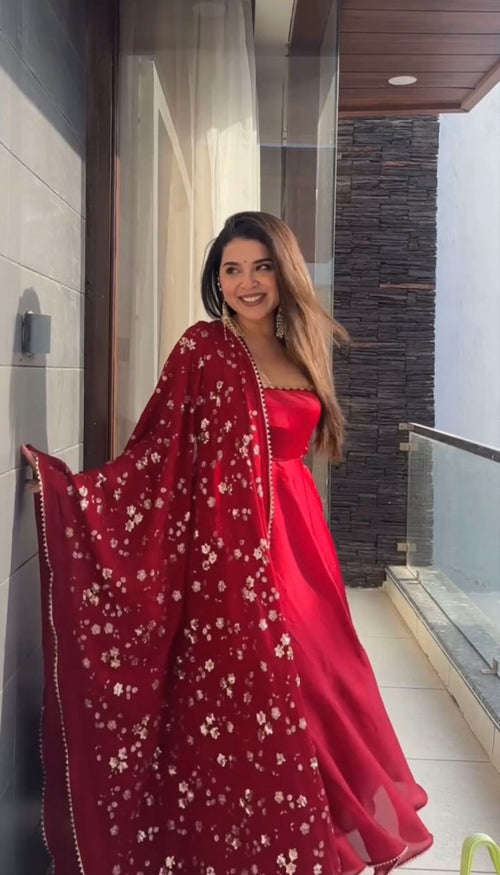
Best colours: red (traditional for Karva Chauth), maroon, orange-gold, deep teal, mauve. These festivals carry the strongest colour traditions — red specifically is the most auspicious colour for Karva Chauth, and gold and orange connect to Diwali's diya theme.
Eid
Best colours: green (the most culturally resonant Eid colour), ivory, blush, sky blue, mint. Green holds particular significance in Islamic tradition; lighter colours suit morning Eid prayers, richer tones the afternoon and evening gatherings. See our Eid dress guide.
Navratri
Best colours: follow the 9-day colour calendar observed across Gujarat and increasingly pan-India — a specific colour is traditionally assigned to each day of the festival.
Office / Formal Setting
Best colours: navy blue, bottle green, burgundy, taupe, chocolate brown. Contained, serious colours read as professional; avoid pastels or very bright tones in formal settings.
Casual / Day Functions
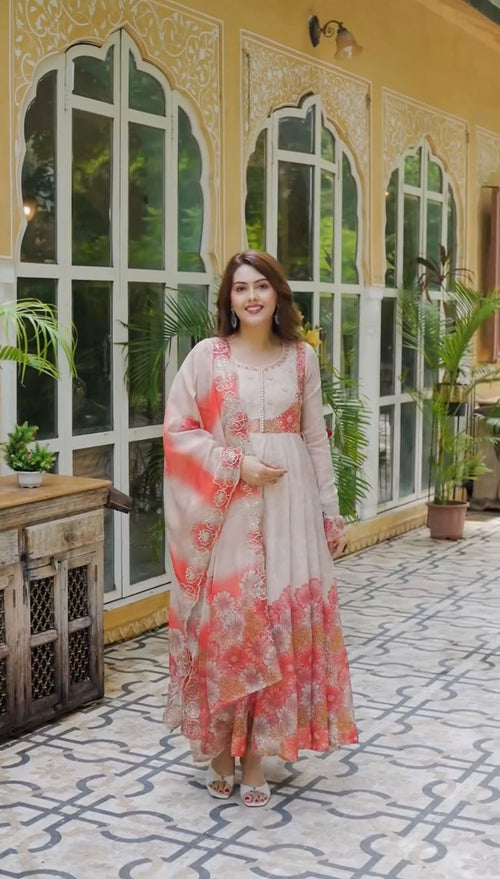
Best colours: peach, powder blue, sage green, dusty rose, off-white, lavender. Lighter tones suit daytime — they work in natural lighting without overwhelming casual settings.
Anarkali Colours by Skin Tone
|
Fair / Light Skin Tone
Almost every colour works well. Pastels (blush, powder blue, mint) look striking for daytime; jewel tones (emerald, royal blue, wine) shine for evening and festive occasions. Avoid very pale yellows or cream, which can wash out a fair complexion. |
Wheatish / Medium Skin Tone
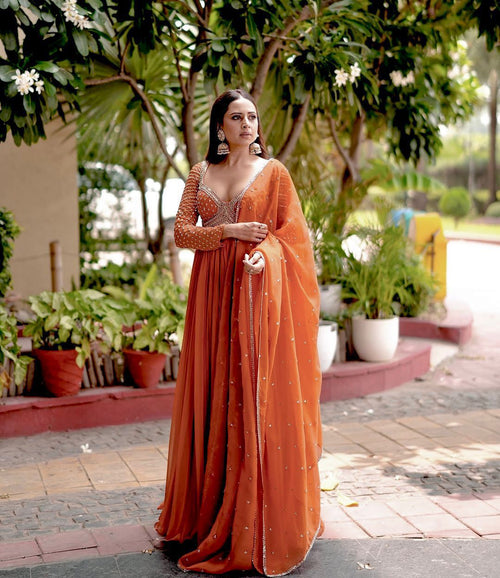
The most versatile skin tone for Indian ethnic wear. Orange, coral and gold are literally lit up by a warm wheatish complexion; teal, turquoise and bottle green also work beautifully, and deep red or maroon look especially rich. |
Bright, bold, saturated colours look exceptional — royal blue, cobalt, bright orange, coral, fuchsia, gold and bright yellow all work well. Avoid very dark navy or black alone, which can merge with a darker complexion; a contrast border or embroidery keeps the definition.
Anarkali Colours by Season
| Season | Best Colours | Why |
|---|---|---|
| Summer (Mar–Jun) | Pastels, white, pale yellow, mint | Light colours reflect heat; jewel tones can feel heavy in strong light |
| Monsoon (Jul–Sep) | Teal, cobalt, emerald, orange | Rich colours look vivid against grey monsoon skies |
| Festive / Autumn (Oct–Nov) | Red, maroon, gold, orange, green | Diwali and Navratri traditional festival colours |
| Winter (Dec–Feb) | Velvet textures in wine, navy, bottle green | Rich, deep-coloured winter fabrics suit the cooler season |
Colours to Avoid — When and Why
- White at most Hindu celebrations: associated with mourning in traditional Hindu context — avoid at weddings, puja and festivals unless the event specifically calls for it (a white-themed modern reception, for instance)
- Black at some traditional events: increasingly popular and fashionable, but some older family members at traditional occasions may consider it less auspicious — know your audience
- The exact bridal colour as a guest: if you know the bride's colour, avoid matching it precisely, even if it isn't red
Frequently Asked Questions
Which colour anarkali is best for a wedding guest?+
What colour anarkali suits a wheatish skin tone?+
Can I wear a black anarkali to a wedding?+
Which anarkali colour is best for Eid?+
What is Snyvia's return policy?+
Find Your Perfect Anarkali Colour at Snyvia
36+ anarkali suits across every colour and occasion. From Rs.3,249. Free shipping across India. COD available.