

The deep U-back and keyhole back are the most popular everyday choices. For weddings, embroidered open backs and bow-tie backs dominate. The right design depends on your blouse fabric, the neckline depth you are comfortable with, and whether your saree's border will frame the back.
Deep U Back
The deep U-back is the single most requested blouse back design in India, and for good reason. It is flattering on almost every body type, easy to tailor, and pairs with the widest range of sarees. The back neckline forms a clean U shape, dropping below the shoulder blades to reveal the back.
There are several variants within this category. The plain U-back is the most common, offering a smooth, uninterrupted curve. The embroidered-edge version adds a thin border of lace, zari, or mirror work along the curve, adding interest without complexity. A third variant adds fabric ties at the two ends of the U, creating a subtle tie-back effect.
In terms of depth, a standard U-back ends 4 to 6 inches below the neckline. A deep U goes further, reaching 7 to 10 inches below, which takes it closer to the natural waist. The standard version suits everyday and office occasions; the deeper cut is popular for evening events, receptions, and festive wear.
Best fabrics: cotton, georgette, and chiffon. These materials follow the curve naturally and maintain a clean edge. For silk sarees specifically, ask your tailor to end the U just above the point where your saree's border drape begins. This ensures the design remains visible and is framed by the border rather than hidden beneath it.
Sweetheart / Heart-Shaped Back
The sweetheart back is a romantic, feminine design where the back neckline is cut in the shape of a heart, with two gentle curves meeting at a central dip. It is a popular choice for sangeet, engagement, and pre-wedding functions, where the mood calls for something a little more playful and expressive.
This design works best in structured fabrics that can hold the curved shape cleanly. Silk, brocade, and raw silk are excellent choices. Avoid using this design in very soft georgette or chiffon, the delicate heart shape can lose definition in fabric that is too fluid, especially if the blouse does not have firm interlining.
A detail worth noting: the sweetheart back pairs especially beautifully with a front boat neckline. The contrast between the wide, horizontal front silhouette and the curved, romantic back creates a balanced, considered look that works across occasions from engagement parties to wedding receptions.
If you want to add detail without going fully embellished, a thin piping or lace trim along the sweetheart curve is enough to make the design feel intentional and finished.
Keyhole Back
The keyhole back is the choice for those who want elegance without a large cutout. A small circular or teardrop-shaped opening appears at the top of the back, held closed just below by a button, hook, or decorative closure. The rest of the back remains covered, creating a modest but undeniably refined look.
Because the keyhole opening is small and positioned high on the back, this design is appropriate for formal occasions, office wear, and religious events where a deeper cutout would feel out of place. It can also be combined with a high back, where the keyhole sits at the nape of the neck, offering just a small glimpse of skin.
The keyhole back is one of the few designs that works equally well across all fabrics. Cotton, silk, georgette, brocade, and crepe all handle the construction cleanly. The button or hook detail at the closure can be treated decoratively, with embellished buttons or a fabric-covered toggle adding a design accent of its own.
For those new to open-back blouses, the keyhole is an excellent starting point. It is a small step away from a fully covered back while still qualifying as a designed, intentional neckline choice.
Backless / Open Back Designs
Backless and open-back designs are statement blouses, intended to be noticed. The fully backless version leaves no fabric below the shoulder blades, while partial open-back variations use criss-cross straps, lattice patterns, or single central straps to add structure while still leaving significant skin visible.
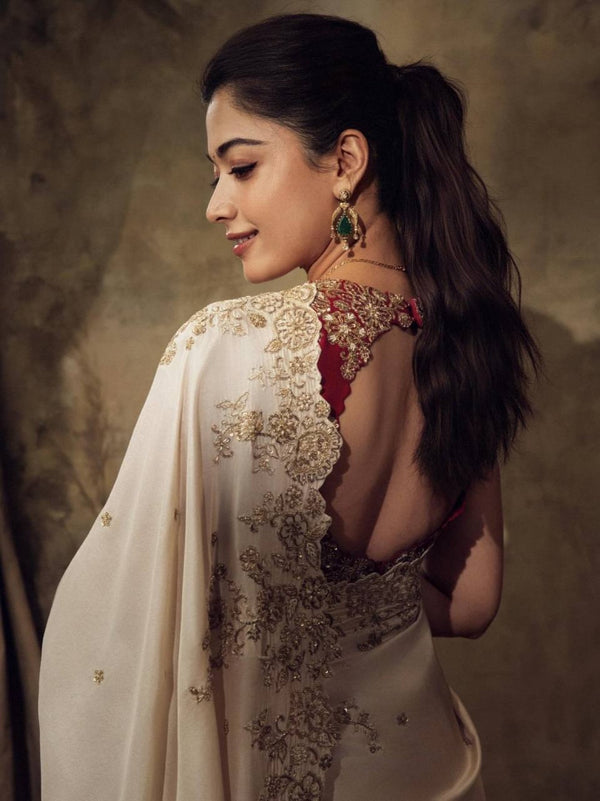
These designs are best suited to parties, receptions, and evening events. The fabrics that work best are structured ones, silk, brocade, and net, which can support the weight of the blouse front without a full back panel to distribute it. Georgette and chiffon can work for lighter backless designs, but they typically require a lining panel or a boning strip along the sides to keep the blouse from shifting.
The most important practical consideration for any open-back blouse is the inner wear solution. A conventional bra strap will be visible and will undercut the design. There are two standard fixes: a stick-on bra, which provides support without any visible straps, or a customised inner cup stitched directly into the blouse by your tailor. The second option is more secure and more comfortable for a full day of wear. It is worth raising this conversation with your tailor before the blouse is cut, because adding inner support after the fact is more complicated than building it in from the start.
Princess Cut Back
The princess cut back is a structured, tailored approach that creates shape through seaming rather than cutouts. The back panel is cut with curved vertical seams that follow the natural contour of the body, creating a fitted, sculptural look without any exposed skin.
This design is particularly popular for formal occasions, workplace events, and situations where an open back is not appropriate but a flat, shapeless back panel would look dull. The seaming does the work of creating a fitted, elegant silhouette without relying on skin visibility.
Best fabrics: dupion, raw silk, and any cotton with some body. These fabrics hold the seam lines cleanly and maintain the structured shape through the day. Avoid very soft, fluid fabrics where the seams will not hold their form.
One of the most useful attributes of the princess cut back is that it is genuinely flattering across all sizes. The seaming can be placed to create the appearance of a narrower waist or a more elongated back, and a skilled tailor can adjust the seam placement to suit each individual's proportions. If you are having a blouse custom-made, this is worth discussing in detail at the fitting stage.
Bow / Tie-Back Designs
The bow-back or tie-back blouse has become a staple of designer saree styling over the past decade, and it remains one of the most requested special-occasion designs. Fabric ties emerge from the sides or shoulders of the blouse and are brought together at the centre back, where they are tied into a bow. The bow can sit at the centre of the back, or it can be positioned to one side for an asymmetric look.
The ties themselves can be made from the same fabric as the blouse (self-fabric), creating a tonal, cohesive look, or from a contrasting fabric or colour that introduces an accent element. A contrasting bow in a complementary shade is a popular choice for bridal functions, where it becomes a deliberate design statement rather than a structural element.
The bow-back design is usually combined with either a U-back or an open back, with the ties serving as the only structural connection across the open area. This means the design choice carries significant implications for coverage, which is worth thinking through before committing. For a bridal or reception look with maximum drama, pairing a deep open back with wide, full-volume ties creates the most impactful result.
Best fabrics: georgette and lighter silks, which allow the ties to fall and form a bow with natural volume and softness. Stiff fabrics like brocade tend to produce flat, awkward bows that do not drape well.
Heavily Embroidered / Bridal Back Designs (Wedding Special)
Wedding blouse back designs occupy a category of their own. For brides and close family members at weddings, the back of the blouse is often as considered as the front, because the moment of the wedding vow, the pheras, or the vidai is captured from behind. An embroidered, detailed back is not vanity; it is an understanding of how a wedding is photographed.
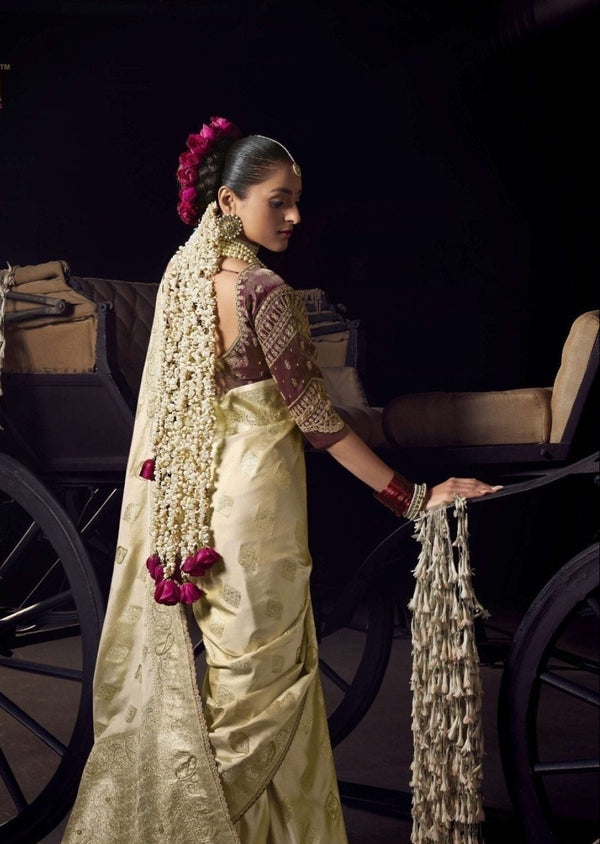

Mirror work back panels, in the Kutch and Gujarat tradition, use small mirrors embedded in embroidery to catch light from every angle. A full mirror-work back panel on a deep U-back or open back blouse is one of the most visually striking choices available, particularly under wedding lighting.
Zari and dabka embroidery on a net backing is another widely used approach. A net panel is stitched as the back of the blouse, with zari (gold or silver metallic thread) and dabka (wire coiling) worked directly onto the net in traditional motifs. The net backing means the embroidery appears to float against the skin, a beautiful effect for a reception.
Stone-studded and kundan border backs take a different approach, placing embellishment along the border of the back neckline rather than across the full panel. A thick border of kundan setting or rhinestones traces the U or heart shape of the back, framing the cutout in a way that draws the eye.
For backless designs, embroidered criss-cross straps have become the signature look of the last few wedding seasons. Two or three straps cross the open back, each densely worked in zardozi, sequins, or thread embroidery. The straps do structural work while functioning as the primary design element.
Zardozi panel backs, using raised metal-thread embroidery, are particularly popular for red and maroon bridal lehenga-sarees and heavy Banarasi drapes. The raised texture of zardozi reads well in photographs and catches light differently than flat embroidery.
All heavily embroidered back designs require a strong inner lining. The weight of embellishment on the back panel is significant, and without a firm lining attached correctly, the blouse can pull, shift, or distort over the course of a long wedding day. Discuss lining thickness and attachment method with your blouse tailor before finalising any heavily embroidered design.
Pair your embroidered blouse with the right saree, browse our saree collection for options suited to bridal and festive occasions.
Square Back
The square back is a geometric design that has moved from contemporary fashion into mainstream Indian ethnic wear over the past few years. The back neckline is cut in a clean square shape, creating a strong, angular line that contrasts with the softer curves of most traditional blouse designs.
The square back is well suited to both indo-western styling and traditional sarees. For indo-western looks, it pairs well with a straight-drape or modern-pleated saree. For traditional drapes, the square back adds an unexpected modern edge without clashing with the saree's aesthetic.
Best fabrics: brocade, raw silk, and cotton with interlining. These fabrics hold the square shape at the corners without rounding off, which is the key to making this design look intentional rather than poorly tailored. If you are using a softer fabric, ask your tailor to add a thin interfacing to the back panel to keep the square corners crisp.
In terms of depth, a square back can range from a shallow 3-inch cutout to a deeper 6-inch version. The shallower version is more versatile for everyday occasions; the deeper square is better suited to parties and festive events.
Collar / High-Neck Back
The collar or high-neck back is the most conservative option in this guide, but it is far from plain. A mandarin collar extends around the full neckline, including the back, creating a finished, formal look that covers the entire back. Within this category, there are variations that add a small back slit, a button row, or a contrasting collar fabric to add design interest.
This design is particularly popular in South India, where silk sarees from Kanjivaram and Mysore are traditionally worn with high-necked blouses. The high back complements the formality of these fabrics and suits the occasions where they are most worn, including temple visits, classical music and dance performances, and traditional family functions.
For those who want a modern take on a high back, a keyhole opening at the nape (the point where the mandarin collar meets the back) creates a design detail without significantly increasing exposure. It is a small addition that breaks the severity of a fully covered back while remaining entirely appropriate for formal occasions.
For more neckline options beyond the back, see our blouse design guide for a complete look at front neckline styles and how they pair with different sarees.
Fabric-Specific Recommendations
The right blouse back design depends as much on your fabric as on your personal preference. Certain cuts rely on fabric structure to hold their shape; others are designed for fluid movement that only soft fabrics provide. The table below matches common blouse fabrics to the back designs that work best with them.
Silk Saree Blouse
U-back, keyhole, or princess cut are the most reliable choices. Avoid very soft draping designs, such as loosely tied backs, which lose shape in structured silk. The U-back should end above the saree's border drape line so the design remains visible. |
Cotton Blouse
All designs work well with cotton. The U-back and square back are the most popular, as cotton holds angular and curved lines cleanly. Princess cut and keyhole also look sharp in cotton, particularly in heavier weaves with body. |
Georgette / Chiffon
Bow-back, sweetheart, and open-back designs suit these fabrics well. The softness and movement of georgette and chiffon make draping designs beautiful, allowing ties and open backs to fall naturally. Ensure lining is added for any open-back design. |
Brocade / Dupion
These stiff fabrics call for structured designs: princess cut, high neck, and heavily embroidered panels. Avoid soft draping designs and bow-backs, as the fabric lacks the fluidity to form a natural bow. The structure of brocade supports a clean square back beautifully. |
How to Give Instructions to Your Tailor
A well-described brief is the most important thing you can bring to a blouse tailor. Most blouse alterations and disappointments happen not because of skill gaps but because of unclear communication between the customer and the tailor. The following steps will help you arrive at your fitting with a clear, complete brief.
- Bring a reference photo. A screenshot from Pinterest, Instagram, or any website works. Tailors are visual people, and a photo eliminates any ambiguity about what you mean by a "heart shape" or a "deep" U. If your preferred design has a specific variant, such as a keyhole with a fabric-covered button rather than a metal hook, mark that on the photo.
- State the depth in inches, not in vague terms. "Medium U" means different things to different tailors. Instead, say: "U-back ending 6 inches below my neckline." Bring a tape measure to the fitting if needed and measure with the tailor present so you are both working from the same reference point.
- Specify whether you want lining, and what kind. For open-back and backless designs, lining is not optional, it is what determines whether the blouse sits correctly. Discuss whether you want a full inner lining, a partial lining along the sides, or integrated cups. The conversation is easier before cutting than after.
- For embroidered backs, buy the embroidery panel separately before your appointment. Ready-made embroidery panels are available at most fabric markets and online. Bringing your panel to the tailor means they can plan the back design around the panel's dimensions, rather than guessing at placement. This also gives you control over the embroidery style and quality.
- Request a try-on before the back design is finished. Ask your tailor to baste the back neckline before doing any finishing work. Try it on and check the depth, fit, and symmetry in a mirror before the final stitching is done. Back designs are significantly harder to alter after finishing than before.
Frequently Asked Questions
Common questions about blouse back neck designs, answered directly.
What is the most popular blouse back design for silk sarees?+
What blouse back design is best for a wedding?+
Can I wear a backless blouse with a saree?+
What is the difference between a U-back and a deep U-back?+
Which blouse back design suits a cotton saree?+
What blouse back design hides a bra strap?+
About Snyvia
Snyvia is an Indian ethnic wear brand offering sarees, lehengas, suit sets and festive collections for women who want quality and considered design in every purchase. At Snyvia, the editorial team covers styling, fabric knowledge, and occasion dressing so you can make informed choices, from choosing your saree to briefing your blouse tailor. Explore the full Snyvia saree range at snyvia.com. Shop at snyvia.com/collections/saree.
Find Your Next Saree at Snyvia
From lightweight georgettes for everyday wear to embroidered silks for weddings and festivities, explore sarees styled for every occasion. Free delivery across India. COD available.


