

A salwar suit is the most versatile daily-wear ethnic bottom, a sharara is a flared, split-leg festive silhouette, and palazzo pants offer a modern wide-leg casual look. All three work beautifully — the right choice depends on the occasion, your body type, and how much movement you need. Snyvia stocks all three from Rs.2,449. Free shipping across India. COD available. 7-day returns.
Walk into any Indian ethnic wear search and three bottoms compete for your attention — the classic salwar suit, the festive sharara, and the flowy palazzo pant. They look similar in thumbnails. They serve completely different purposes in real life. A salwar suit you wear to the office on a Thursday. A sharara you wear to a cousin's sangeet. A palazzo set you wear to a Sunday brunch.
Knowing the difference before you buy saves you from owning three outfits that all work for the same two occasions. This guide covers what each silhouette actually is, which occasions and body types each one suits, and exactly which one to order first.
What Is Each One?
Salwar Suit
A 3-piece ethnic outfit — a kameez (long top/tunic), salwar (tapered or straight-cut pants), and dupatta. The most versatile ethnic bottom in Indian fashion, appropriate for offices, college, casual outings, family visits and formal occasions depending on fabric and embellishment. The silhouette narrows toward the ankle, giving a neat, contained look with easy movement.
Sharara Suit
A 3-piece outfit — a short kurti (often hip-length), heavily flared split pants (the sharara), and dupatta. The sharara pants are the defining feature: they flare dramatically from the knee downward, photographing like a skirt from the front but functioning as pants. This flare makes it a festive garment, designed to be seen at celebrations rather than practical for commuting.
Palazzo Suit / Set
A 3-piece outfit — a kurti or top, wide-leg straight palazzo pants, and optional dupatta. The pants are wide throughout from hip to hem — not tapered like salwar, not split-flared like sharara. Contemporary and relaxed, it sits between salwar (more formal/traditional) and sharara (more festive) on the occasion spectrum.
Side-by-Side Comparison
| Feature | Salwar Suit | Sharara Suit | Palazzo Set |
|---|---|---|---|
| Silhouette | Tapered leg | Flared from knee | Wide straight leg |
| Best occasion | Daily, office, family | Festive, wedding, sangeet | Casual, travel, brunch |
| Ease of sitting | ✅ Very easy | ⚠️ Fabric bunches | ✅ Very easy |
| Ease of dancing | ⚠️ Restricted | ✅ Excellent | ✅ Good |
| Festive impact | Moderate | High | Low–moderate |
| Price at Snyvia | From Rs.3,400 | From Rs.2,899 | From Rs.2,449 |
Which to Choose — By Occasion
For a Wedding (as a Guest)
Sharara wins for sangeet and mehendi — the flared silhouette is festive and photographs well. For the ceremony itself, a heavily embroidered salwar suit in a rich fabric is equally appropriate and more practical for a full day of sitting. Browse Sharara Sets · Browse Suit Sets
For Office or College
Salwar suit, always. A palazzo set in a plain or printed fabric is also appropriate for casual offices. Sharara is too festive for a professional setting — the flare draws attention that doesn't belong in a meeting room.
For Eid
Both sharara and salwar suit are appropriate for Eid. A heavily embroidered salwar suit in silk or georgette is the traditional choice; a sharara adds a more modern, festive feel for a celebration or iftar party. See Eid Collection
For Casual / Daily Wear
Palazzo set or a simple cotton salwar suit. Both are comfortable, easy to wear, and appropriate for day-to-day life. Sharara isn't a daily-wear garment — the flare needs conscious attention when sitting or commuting.
Which to Choose — By Body Type
|
🌷 Petite (Under 5'3")
|
💪 Curvy / Plus Size
|
|
⭐ Tall (Over 5'6")
All three work beautifully. A full-flared sharara is especially dramatic on a tall silhouette; wide palazzo pants look elegant; a long straight-cut salwar creates a classic elongated look. |
🏃 Slim / Athletic
Sharara's flare and palazzo's wide leg both add volume; a fuller kameez balances the tapered salwar for the same effect. |
Styling Tips for Each
Styling a Salwar Suit
Keep jewellery moderate for daily wear (studs, small necklace); go heavier for festive occasions (jhumkas, layered necklace). Block heels or wedges elevate it to occasion-wear; flats or juttis keep it casual. Pin the dupatta to both shoulders for formal occasions, drape it loosely for casual.
Styling a Sharara
Statement jewellery works well — the flare already does the visual work. Heels (even 2 inches) elongate the look; ensure the hem clears the floor. Pin one end of the dupatta to the shoulder and let it fall — don't wrap it around, since that restricts the flare's movement.
Styling a Palazzo Set
Keep it simple — the palazzo's volume means a fitted kurti or short top works best on top. Wedges or block heels look polished; flats work for casual. Minimal jewellery for daytime, layered for evening functions.
Our Recommendation — Which to Buy First
If you're building an ethnic wardrobe from scratch and can only buy one:
- Buy a salwar suit first. It covers the widest range of occasions — daily, office, family, casual festive — and is the most practical everyday ethnic garment.
- Buy a sharara second when you have a specific festive occasion coming up — a wedding, sangeet, or Eid celebration.
- Buy palazzo third if you want maximum comfort for regular ethnic wear.
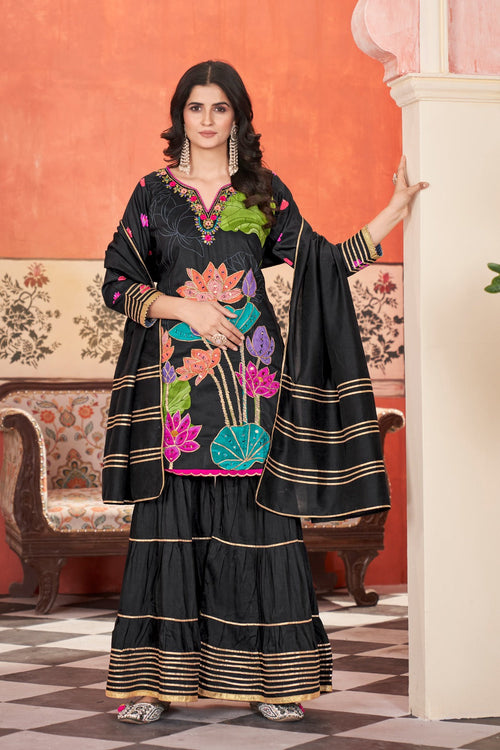
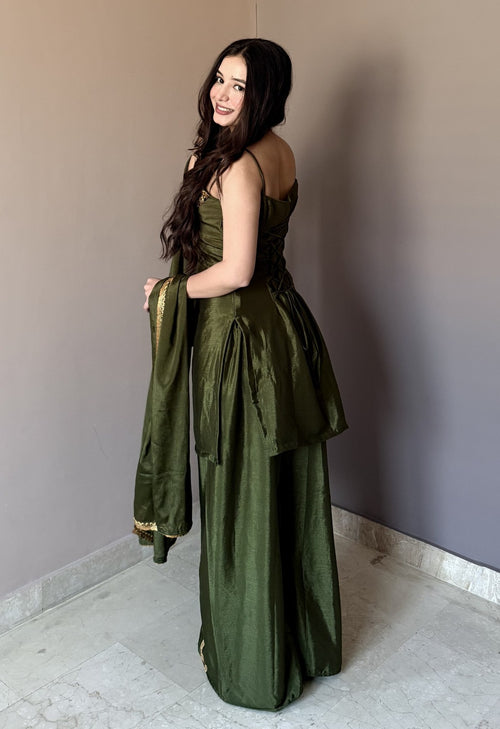
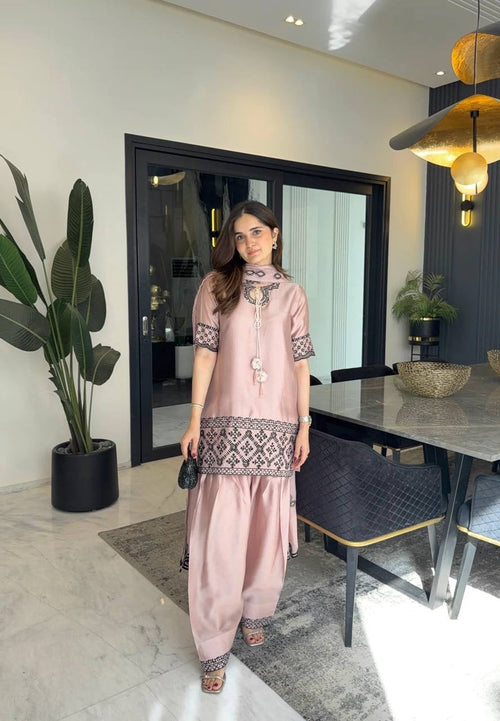
See the size guide before ordering.
Frequently Asked Questions
What is the difference between a sharara and a salwar suit?+
Can I wear a sharara to a wedding as a guest?+
Which is more comfortable — sharara or palazzo?+
Which silhouette is best for plus-size women?+
Can I wear a palazzo suit to the office?+
What is Snyvia's return policy on ethnic wear?+
Shop Salwar Suits, Sharara & Palazzo Sets at Snyvia
From Rs.2,449. Free shipping across India. COD available. 7-day returns.