

Silk is the most formal lehenga fabric, but the term covers several distinct types, from heavy Kanjivaram and Banarasi silk to lighter raw silk, dupioni and tissue silk. Choose Kanjivaram or Banarasi for the bride at a very formal wedding, and raw silk, dupioni or a silk blend for guests attending receptions and formal occasions. Snyvia's silk lehenga picks start from Rs.10,530. Free shipping. COD. 7-day returns.
Silk is the most formal lehenga fabric available. It is also one of the most misunderstood, because "silk lehenga" covers multiple distinct fabrics with very different weights, textures and occasion suitability. A Kanjivaram silk lehenga and a raw silk lehenga are not the same garment. This guide explains the difference, maps which silk type suits which occasion, and covers everything needed to choose the right one. For the bridal silk lehenga specifically, see our bridal lehenga guide.
Types of Silk Used in Lehengas
- Kanjivaram silk: woven in Tamil Nadu, extremely heavy and rich, traditionally with gold or silver zari woven into the fabric. The most formal and most expensive silk for lehengas. Best for very formal weddings, whether bride or close family, and South Indian wedding occasions.
- Banarasi silk: woven in Varanasi, recognisable by its brocade patterns with floral motifs and zari work woven into the fabric, and slightly lighter than Kanjivaram. Best for North Indian weddings, receptions and formal festive occasions.
- Raw silk: has a natural, slightly rough texture and sheen, less heavy than Kanjivaram or Banarasi, and more structured than georgette. Best for wedding guests and formal occasions, and the most versatile of the silk types.
- Dupioni silk: two threads woven together, creating a characteristic slub texture, crisp and structured. Best for contemporary formal occasions, receptions and evening events.
- Tissue silk: very fine, semi-sheer silk with a metallic sheen, often used with embroidery layered on top, and lightweight relative to other silks. Best for evening events, sangeet and festive occasions.
- Silk blend: usually silk combined with georgette or polyester, more affordable than pure silk, and drapes more fluidly. Best for occasions where you want the silk look at a lower weight and price.
Silk vs Georgette: Which to Choose for a Lehenga?
The most common buyer question, in a direct comparison:
- Silk: heavier, more structured, more formal, more expensive, and holds its shape
- Georgette: lighter, more fluid, more comfortable for long events, more affordable, and moves more gracefully. See our georgette lehenga guide.
The decision rule: if you are attending a formal wedding ceremony or reception and formality is the priority, choose silk. If you need to be comfortable for 4 or more hours of dancing, choose georgette. For a bridal lehenga at a very formal wedding, Kanjivaram or Banarasi silk is traditional and appropriate. For a wedding guest who will be on their feet all evening, a silk blend or heavy georgette is more practical.
Best Occasions for a Silk Lehenga
- Wedding ceremony (bride): Kanjivaram or Banarasi silk, the most appropriate bridal choice at a very formal wedding
- Wedding reception (guest): raw silk, dupioni or a silk blend, adding formality appropriate for the occasion
- Festive events (Diwali, Karva Chauth, indoor Navratri): tissue silk or raw silk, since the sheen catches festive lighting beautifully
- Sangeet night: tissue silk or a silk blend, since the movement is more practical for dancing than heavier silk types
- Office festive events: raw silk or a silk blend, smart and professional-looking, appropriate for a corporate festive occasion
Best Colours in Silk Lehengas
Silk handles colour differently from georgette. The sheen intensifies colour.
- Deep jewel tones look richest: navy, wine, emerald, teal
- Traditional colours for Kanjivaram or Banarasi: red, deep pink, gold and green, woven with zari that makes them look extraordinarily rich
- Pastels on silk can look very elegant: a dusty rose raw silk lehenga for a daytime wedding is a classic choice
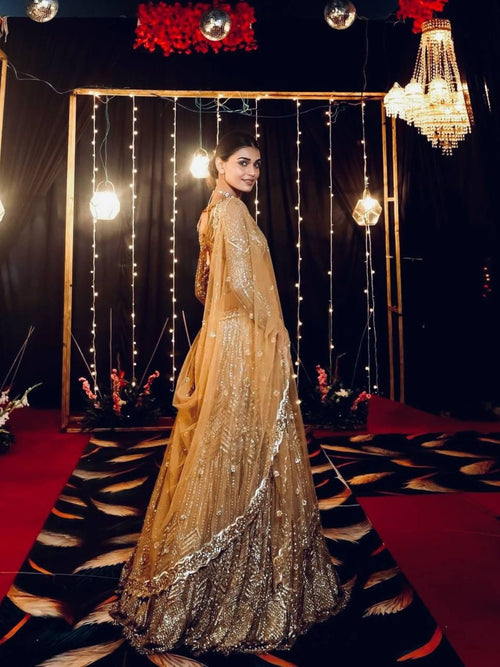
- Gold and champagne: tissue silk in these tones is one of the most photogenic lehenga choices for evening events
Styling a Silk Lehenga
- Jewellery: gold jewellery is most complementary with silk. Traditional kundan and temple jewellery for Kanjivaram or Banarasi, and polki or uncut diamond for raw silk.
- Blouse: a matching silk blouse is traditional. A contrasting velvet or brocade blouse adds contemporary interest.
- Dupatta: a silk or net dupatta drape. For Kanjivaram or Banarasi, a matching silk dupatta is traditional.
Caring for a Silk Lehenga
- Dry clean only, especially for Kanjivaram, Banarasi and raw silk
- Never wash silk lehengas at home. The zari and embellishment can be permanently damaged.
- Store wrapped in muslin cloth, not plastic, in a cool, dry place
- Hang for storage where possible. Folding creates permanent creases in stiff silk.
- Air the lehenga after wearing. Never store it immediately after an event.
Frequently Asked Questions
What is the difference between a silk lehenga and a georgette lehenga?+
Is a silk lehenga appropriate for a wedding guest?+
How heavy is a Kanjivaram silk lehenga?+
What is a Banarasi silk lehenga?+
Shop Silk Lehengas at Snyvia
Free shipping across India. COD available. 7-day returns.