

For a wedding ceremony, choose Banarasi silk or Kanjivaram silk in jewel tones. For a reception, embroidered georgette or organza photographs beautifully. For daytime functions like mehendi, a printed or cotton saree is more practical. Avoid bridal red and white. Snyvia's saree collection starts from ₹1,950 with free shipping across India.
A saree is universally appropriate for every Indian wedding function without exception. It is the one outfit that no guest ever looks overdressed or underdressed in, provided they match the fabric and weight to the specific occasion. The question for most women is not whether to wear a saree, but which saree for which function.
This guide is specifically for wedding guests, not brides. The focus is on practical decisions: which fabric for which function, which colours are safe and which to avoid, and how to style the complete look for a long day of celebrations. For fabric-specific guidance on what distinguishes Banarasi from Kanjivaram or Muga Cotton from Georgette, see our dedicated saree fabric guide and our saree petticoat guide for what to wear underneath.
Why Saree Is the Perfect Wedding Guest Choice
A saree has one advantage over every other wedding guest outfit: it never reads as competing with the bride. A lehenga in the wrong colour or silhouette can accidentally mirror bridal styling. An anarkali in heavy embellishment can feel like an event in itself. A saree, regardless of how rich the fabric, reads as traditional and appropriate at every wedding function without needing a second thought about whether it is too much or too little.
The second advantage is versatility. The same saree can be restyled for different functions simply by changing the blouse, the jewellery and the draping style. A Kanjivaram silk worn with a silk blouse and temple jewellery suits the wedding ceremony. The same saree, worn with a contemporary embellished blouse and modern statement jewellery, suits the reception. No other outfit adapts this way.
The only genuine skill involved is matching the fabric weight to the function. That is what the rest of this guide covers.
Which Saree Fabric for Which Wedding Function
| Function | Best Fabric | Why It Works | Avoid |
|---|---|---|---|
| Haldi | Linen, cotton | Breathable, easy to wash, turmeric risk is real | Silk, heavy embroidery |
| Mehendi | Printed georgette, cotton | Lightweight, easy to move in, prints look festive | Very heavy silk or velvet |
| Sangeet | Georgette, chiffon | Light enough to dance in, drapes beautifully | Very stiff Kanjivaram or Banarasi |
| Wedding Ceremony | Banarasi silk, Kanjivaram silk | Traditional, structured, carries the weight of occasion | Plain cotton, casual prints |
| Reception | Embroidered georgette, organza, net | Catches light beautifully, rich embellishment reads as grand | Casual daywear fabrics |
Banarasi vs Kanjivaram for a Wedding Guest
Both are appropriate for the ceremony and reception. The practical difference is weight and regional context. Kanjivaram is heavier and more structured, traditionally the choice for South Indian weddings. Banarasi drapes more fluidly and suits North Indian weddings and long ceremonies where you will be moving between functions. If you are attending a multi-day wedding across different venues, Banarasi is more practical. If you are attending a single South Indian ceremony, Kanjivaram is more culturally resonant. Our saree fabric guide covers the full comparison in detail.
Colour Guide for Wedding Guest Sarees
|
✅ Safe Choices
|
❌ Colours to Avoid
|
Regional note: In South Indian weddings, cream and gold may be bridal colours. In Bengali weddings, white with a red border is traditional and appropriate for guests. In Muslim weddings, green is particularly auspicious. Always confirm with someone close to the bride before finalising a colour that could overlap with the bridal palette.
How to Style a Saree for a Wedding
💎 Jewellery
For a silk saree at the ceremony, gold temple jewellery or kundan sets are the most traditional pairing. The jewellery should complement the saree's fabric richness without competing with it. For a georgette or organza saree at the reception, contemporary statement jewellery works well since the fabric is lighter and can carry more visual weight from accessories.
👠 Footwear
Embellished block heels or juttis work best for long wedding functions where you will be standing for extended periods. A saree's hemline requires at least a modest heel to drape correctly at the floor. Flat sandals are acceptable for haldi and mehendi functions where comfort takes priority.
🪔 Draping and Pinning
Use 4 to 6 safety pins for a wedding saree — more than you would for a casual occasion. Pin the pleats at the waistband, the pallu at the blouse shoulder, and at least one pin at the pallu midpoint if you are attending a function with movement (sangeet) or photography where the pallu needs to stay in place. For petticoat guidance see our saree petticoat guide.
Top Wedding Guest Saree Picks at Snyvia
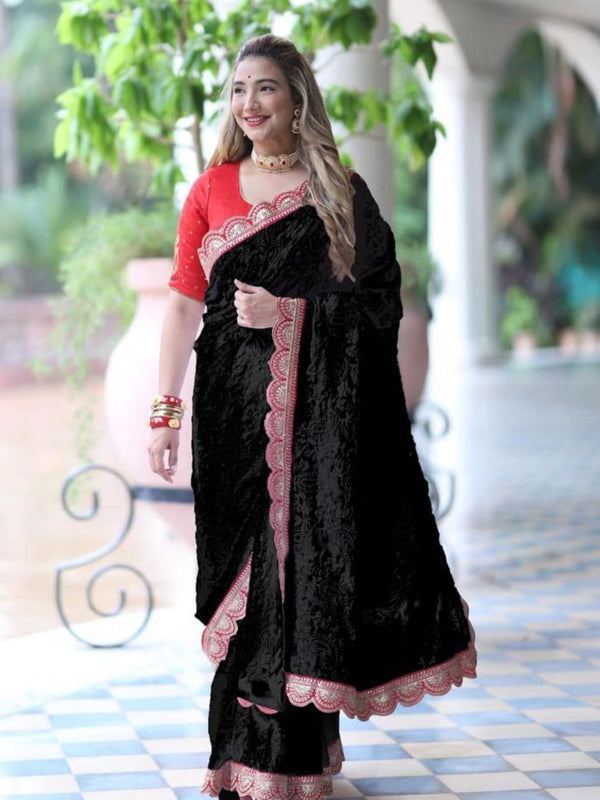
All products below are verified live from Snyvia’s current saree collection. Every image is the exact product you will receive.
For the Wedding Ceremony


For Mehendi and Daytime Functions

Frequently Asked Questions About Sarees for Wedding Guests
Common questions about choosing a wedding guest saree, answered directly.
Which saree is best for a wedding guest?+
What colour saree should a wedding guest wear?+
Can I wear a cotton saree to a wedding?+
What saree fabric is best for a reception?+
How do I drape a saree for a wedding as a guest?+
What is the price of sarees for weddings at Snyvia?+
Find Your Wedding Guest Saree at Snyvia
Banarasi silk for ceremonies, Muga cotton for mehendi, Chikankari georgette for sangeet — Snyvia's saree collection covers every wedding function from ₹1,950.
📦 Free shipping across India. COD available.